IBI-Ag’s development pipeline spans multiple insect pest targets and crop categories.
Our dual-platform approach, combining first generation of nanobody discovery with second generation of AI de novo design proteins, enables us to build a broader and faster-growing pipeline than would be possible with any single technology.
A Pipeline Built Start to End

Discovery

In-vitro Validation

In-Vivo Bioassay

Greenhouse Trials

Field Trials

Registration & Launch
A Pipeline Built
on Two Engines

Our first-generation nanobody-based products bring a validated, in vivo-proven foundation to the pipeline, with a proprietary target library and demonstrated efficacy against key pest species.
Our second-generation AI-designed proteins expand the pipeline’s reach, enabling us to pursue targets that were previously inaccessible and compress development timelines from 12 months to just 4.
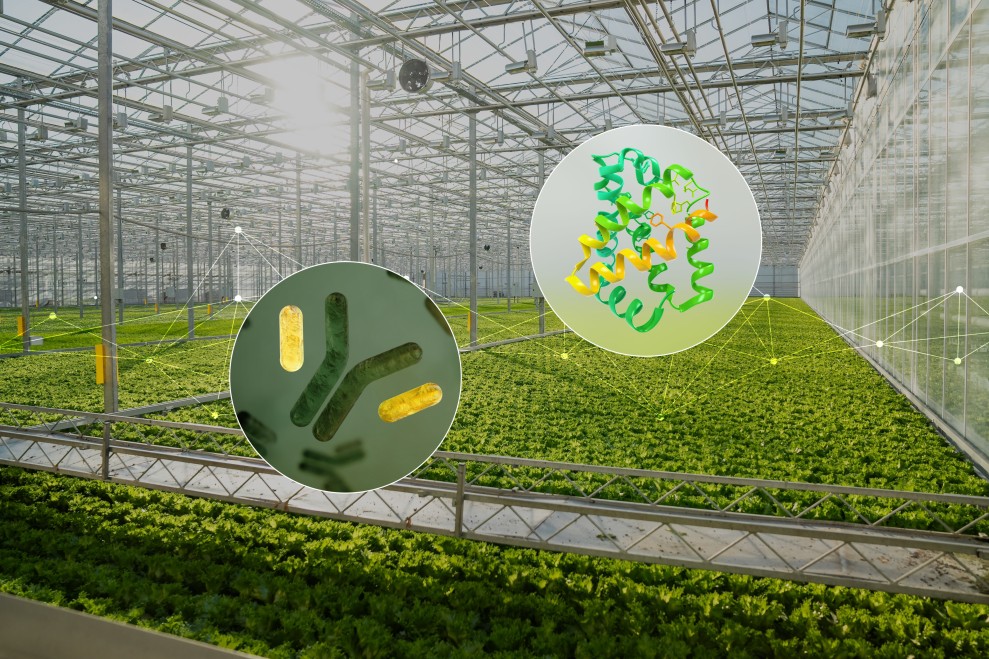
Together, these two platforms give IBI-Ag the ability to advance multiple programs simultaneously, across pest species, crop categories, and geographies.
What Sets Our Pipeline Apart
Dual-platform breadth
Two independent discovery engines generating candidates in parallel, reducing development risk and increasing pipeline velocity.
Proprietary targets
Our pipeline is anchored in a curated, validated bank of insect protein targets unavailable to competitors, giving us a head start at every stage.
Novel Mode of Action
Every program in our pipeline is built around a new MoA, reducing the risk of cross-resistance with existing insecticide classes and strengthening the long-term commercial value of each candidate.
Favorable regulatory profile
Protein-based biopesticides present a streamlined regulatory pathway compared to synthetic chemistry, supporting faster routes to market across key geographies.
Next Steps
Following the successful AI De Novo POC in early 2026, IBI-Ag is advancing lead candidates into greenhouse efficacy trials, expanding the AI platform’s target library, and initiating new design cycles against additional high-priority pest targets, while exploring collaborative development and licensing opportunities with strategic agricultural partners.