IBI-Ag’s technology platform is built on three interlocking pillars:
deep biological knowledge of insect physiology and target proteins (IP backed), advanced protein engineering capabilities using cutting-edge artificial intelligence and skilled labs in the loop conducting protein analysis and insects assays.
Target Biology & Proprietary Data
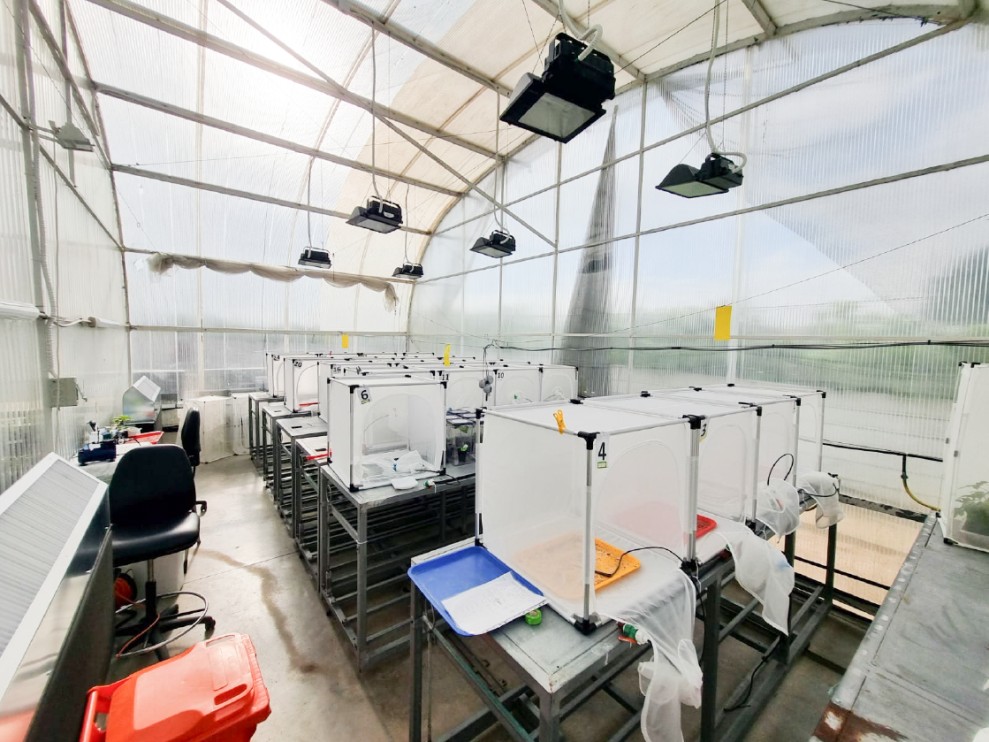
Effective bioinsecticide development begins with target selection. IBI-Ag has built a proprietary knowledge base of protein targets validated within key insect pest species, spanning both soluble and membranal proteins, and covering a range of essential biological functions.

This proprietary data asset is our core competitive advantage: it underpins both our nanobody screening process and our AI De Novo design pipeline, enabling us to focus computational and experimental resources on targets with the highest likelihood of success.
Protein Engineering
IBI-Ag engineers bioinsecticide proteins using two complementary approaches:

Single Domain Antibodies (Nanobodies)
Generated through in vivo immunization and panning against target proteins. Nanobodies are selected and optimized for binding affinity, specificity, environmental stability, and formulation compatibility.
AI De Novo Designed Proteins
Entirely novel proteins, generated computationally and validated experimentally. Designed to achieve desired binding and functional properties against targets that may be inaccessible to conventional antibody-based approaches.
AI & Computational Design
The IBI-Ag AI De Novo platform applies state-of-the-art machine learning and structural modeling to the challenge of bioinsecticide protein design.
The Platform performs:

Epitope characterization and conservation analysis

Target protein dynamics and conformation modeling

Lab-in-the-Loop validation

Multi-parameter biophysical property prediction (solubility, stability, specificity and more)

Multi-criteria filtering and prioritization of lead candidates

De novo generation of protein binder candidates
Intellectual Property
IBI-Ag’s technology is protected by a growing portfolio of intellectual property, including target data, modes of action and protein libraries